In-Office Procedures
Intravitreal Injections
24-48 Hour Post-Injection Expectations
In the hours after your intravitreal injection your eye may feel “gritty”, like you have dirt or sand in it, and you may experience some tearing, mild soreness, burning, and/or irritation. Your doctor may apply an antibiotic ointment immediately after the procedure to alleviate symptoms. After 24-hours, symptoms should be 50-70% resolved and almost fully back to normal within 48-hours.The eye patch applied to your eye should be kept on temporarily for 2-3 hours post-procedure to avoid abrasion or accidental rubbing, and to keep the ointment on if we applied it. Once the patch is self-removed you can use an over-the-counter lubricant eye ointment and/or artificial tear drops to soothe your eye.
Your retina specialist may check your intraocular pressure (IOP) following the injection. There is a temporary rise that usually returns to baseline in a few minutes. The IOP may take longer to normalize in patients with glaucoma and needs to be monitored.
Other Normal Symptoms
- Floaters: drifting spots or specs in your vision; black, gray, or transparent strings, shadows, or cobwebs. These floaters are usually tiny air bubbles the syringe creates that are impossible to eliminate, even in the most experienced hands.
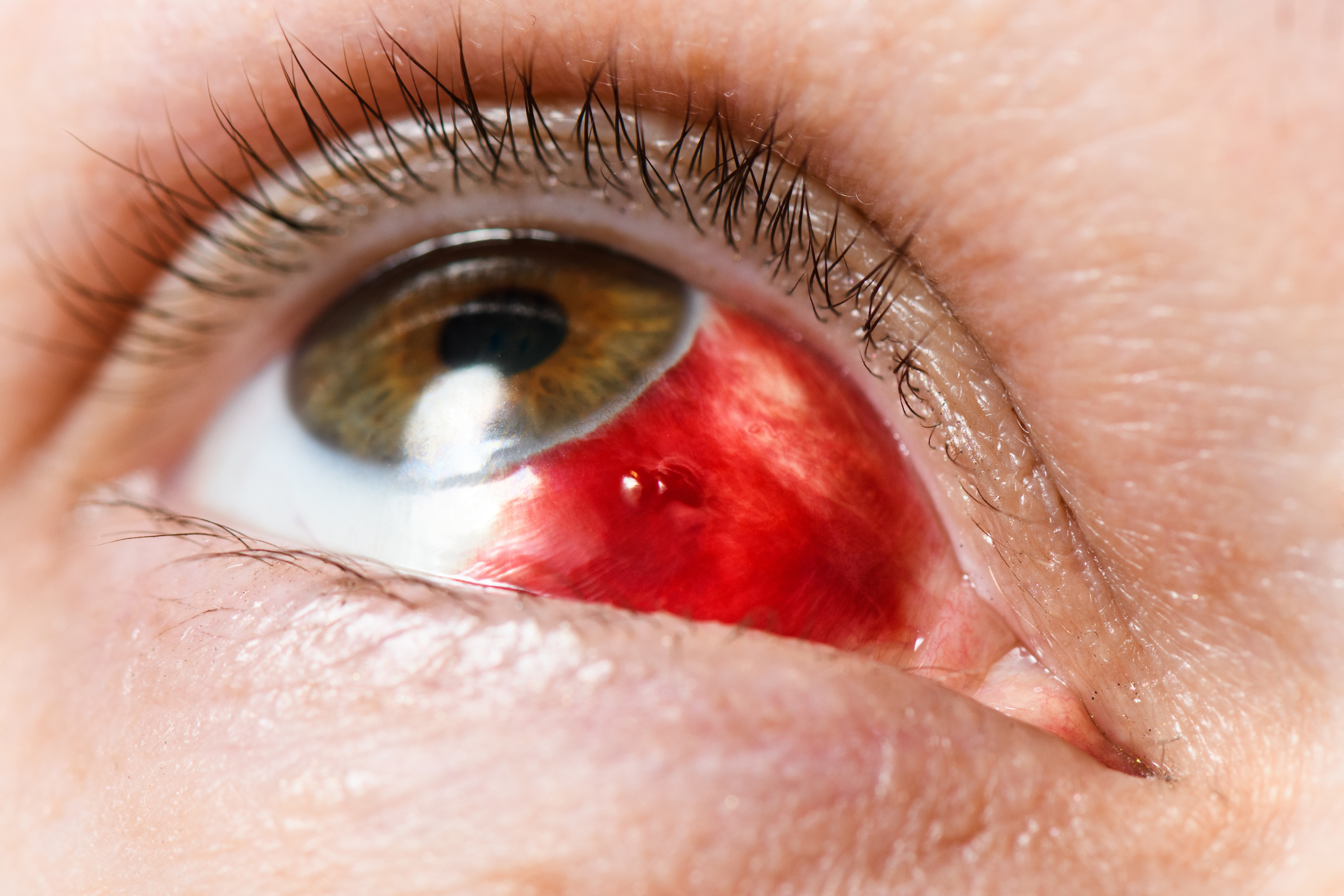
- A localized red spot or patch on the surface of the eye. This is where the needle punctured a blood vessel causing a small bleed or subconjunctival hemorrhage; this usually heals within a week.
Retinal Laser Treatment
A retinal laser is a concentrated, high-energy beam of light that passes through the cornea and lens (non-retinal tissue) without damaging them, focusing very precisely on diseased tissue in the back (posterior segment) of the eye. These types of lasers are different from those used in refractive surgery, such as LASIK or PRK.
Retinal laser photocoagulation is an in-office procedure used to treat several retinal conditions, including retinal tears, diabetic retinopathy, macular edema, and retinal vein occlusion. It is most frequently used to seal a retinal tear to prevent development of a retinal detachment. A retinal laser is also used to treat conditions involving abnormal blood vessels to prevent further retinal damage and preserve sight
Cryotherapy
Cryotherapy or cryopexy is a means of freezing the area of the retina where a retinal tear has occurred. It is a procedure that uses intense cold to induce a retinal scar around the tear. The scar acts as a kind of glue to heal the tear in the retina. It then takes around 10 to 14 days to heal. Early detection of retinal tears is crucial to the success rate of the procedure. If left untreated, a retinal detachment may occur.
Your CRA physician will decide which procedure, laser or cryotherapy is the right option to treat your retinal condition.